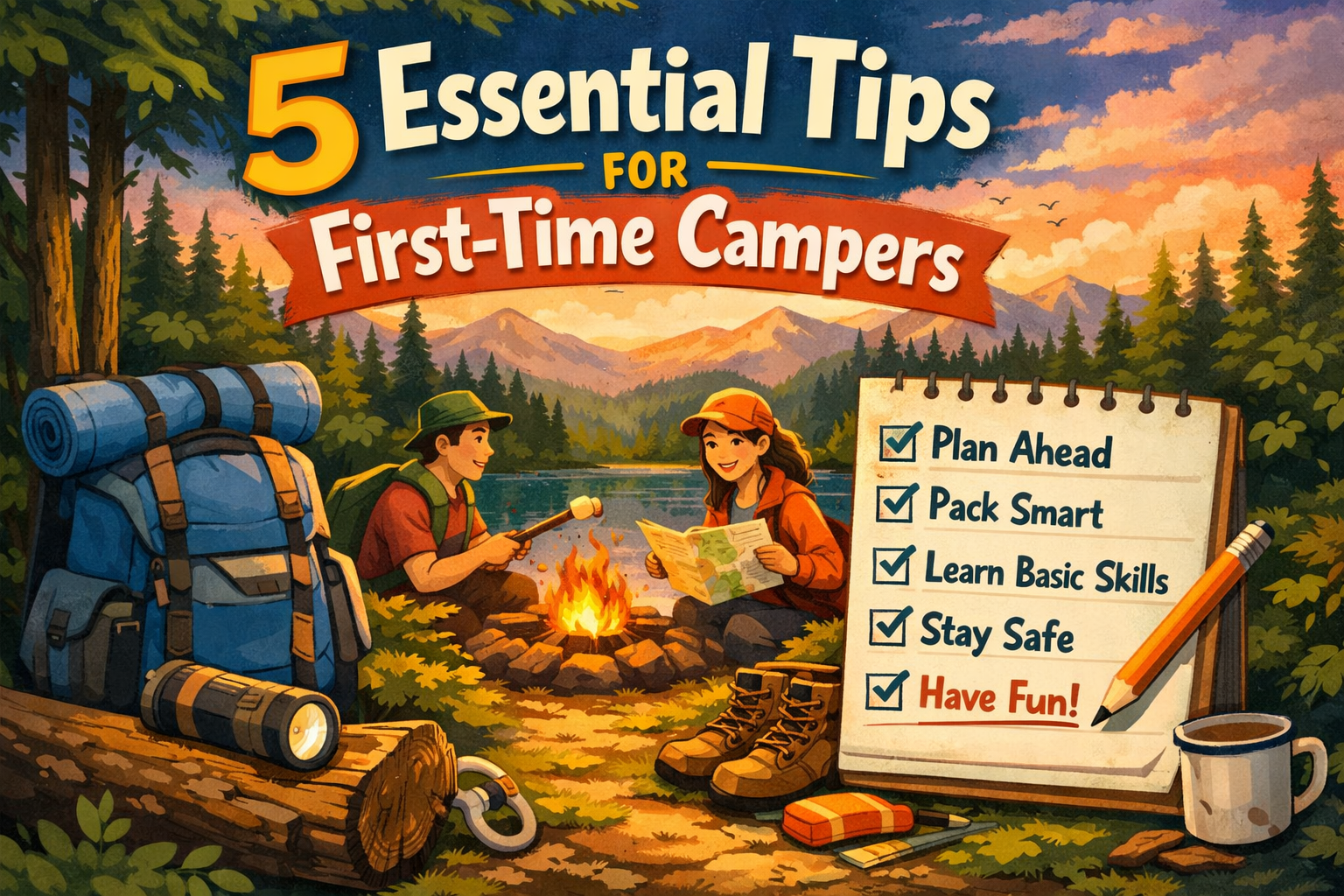
We hand out camping gear to first-timers every other week. Couples on their first weekend away. Families taking the kids out for the first time. People who've decided that 2026 is the year they'll finally try it.
And we hear back from them when they return. The same handful of mistakes come up over and over — small things that nobody tells you until you've made them yourself. So here are the five tips we wish every first-time camper knew before they left.
1Pitch your tent before you leave home
The single most common mistake: arriving at the campsite at 4pm, opening the tent bag, and realising you have no idea how it works. Now you're standing in fading light, in front of strangers, trying to figure out which pole goes where while the kids whine and the wind picks up.
Do this instead: The day before you leave, take the tent out into the garden and pitch it. The whole thing. Stake it down, run the rainfly, the works. Stand inside it. Then take it down and pack it again. The first time always takes longer than you think — better to make that mistake at home than at camp.
Take a photo of the tent fully pitched before you take it down. When you set up at the campsite, you've got a reference for what it should look like.
2Choose your pitch carefully
You arrive at the campsite. You see a flat-looking spot under a beautiful big tree. You pitch there. That night it rains, water pools under your tent because the "flat" spot is actually a slight hollow, and the tree drips condensation onto your fly for an hour after the rain stops. Welcome to camping.
What to actually look for in a pitch:
- Genuinely level ground. Lie down on it before you commit. If you slide, the spot's not level enough.
- High ground, not low. Water flows downhill. You want to be on the flow's source, not its destination.
- Some shelter from wind, but not directly under big trees. Branches drop. So do leaves and bird mess.
- Distance from ablutions. Far enough for quiet, close enough for the 2am loo run.
- Morning sun position. The sun on your tent at 6am will wake you up whether you like it or not. Some people want this. Some don't. Plan accordingly.
3Pack a "first hour" bag
The first hour at a new campsite is chaos. You're tired from the drive, the kids are restless, you need to set up before dark, and somehow you also need to make food. Most first-timers try to dig through every cooler and every box looking for a single thing.
Solve it ahead: pack a separate bag — a small backpack works — with everything you need in the first hour:
- A snack and drinks for everyone
- Headlamps or torches (already on, batteries fresh)
- Lighter or matches
- Toilet paper and a small first-aid kit
- A jersey or fleece each (it always gets cold faster than you expect)
- Whatever the kids need to be entertained for 20 minutes
This bag stays with you, on top of everything else, easy to grab. The rest of your packing can wait.
4Bring more lighting than you think you need
It gets dark at camp. Properly dark. Not your-suburb-at-night dark — bushveld dark, where you can't see your own feet. First-timers always underestimate how much light they need to do basic things like cook, find the keys, or visit the loo.
Our recommended minimum for two people:
- One headlamp per person. Hands-free is non-negotiable for cooking, dishes, and the night walk to the loo.
- One bright lantern for the central area where you eat and sit. Battery-powered or rechargeable beats gas for first-timers.
- String lights or small lamp inside the tent. Trying to find your sleeping bag in pitch dark with one tiny torch is misery.
- Spare batteries for everything. Lights die fastest at the worst moment.
5Plan simpler meals than you think
People watch outdoor cooking videos and think they're going to make Thai green curry over an open fire. Then they get to camp, realise they're exhausted from setup, the wind is making the stove temperamental, and the kids want food now. The curry doesn't happen. They eat plain bread.
For your first trip, plan meals that meet two criteria: quick and forgiving of imprecise cooking.
- Night 1: Don't cook. Pick up takeaway on the way to camp, or pack pre-made sandwiches. Setup eats more time than you expect.
- Breakfasts: Cereal, yoghurt, fresh fruit, or rolls and cheese. Save bacon-and-eggs for once you've got the rhythm.
- Lunches: Sandwiches, wraps, anything cold and ready-to-eat.
- Dinners: Pre-marinated braai meat, simple pastas, foil-packet dinners. One pot, one pan, that's the limit.
You can get fancy on trip three or four. Trip one, the goal is to enjoy yourself, not impress anyone.
One last thing
Your first trip will not go perfectly. Something will go wrong — a peg will bend, the gas will run out, it'll rain when the forecast said sun, someone will forget the can opener. That's not failure. That's camping. The people you'll meet around campfires for the rest of your life all have a "first trip disaster" story they tell with a grin.
Go anyway. The bad bits become the funny bits. And the good bits — sitting under the Milky Way at 10pm with no work email anywhere near you — those are why people keep going back.
Skip the gear-buying anxiety.
Hire everything you need for your first trip. We'll throw in a quick walkthrough on how it all works.