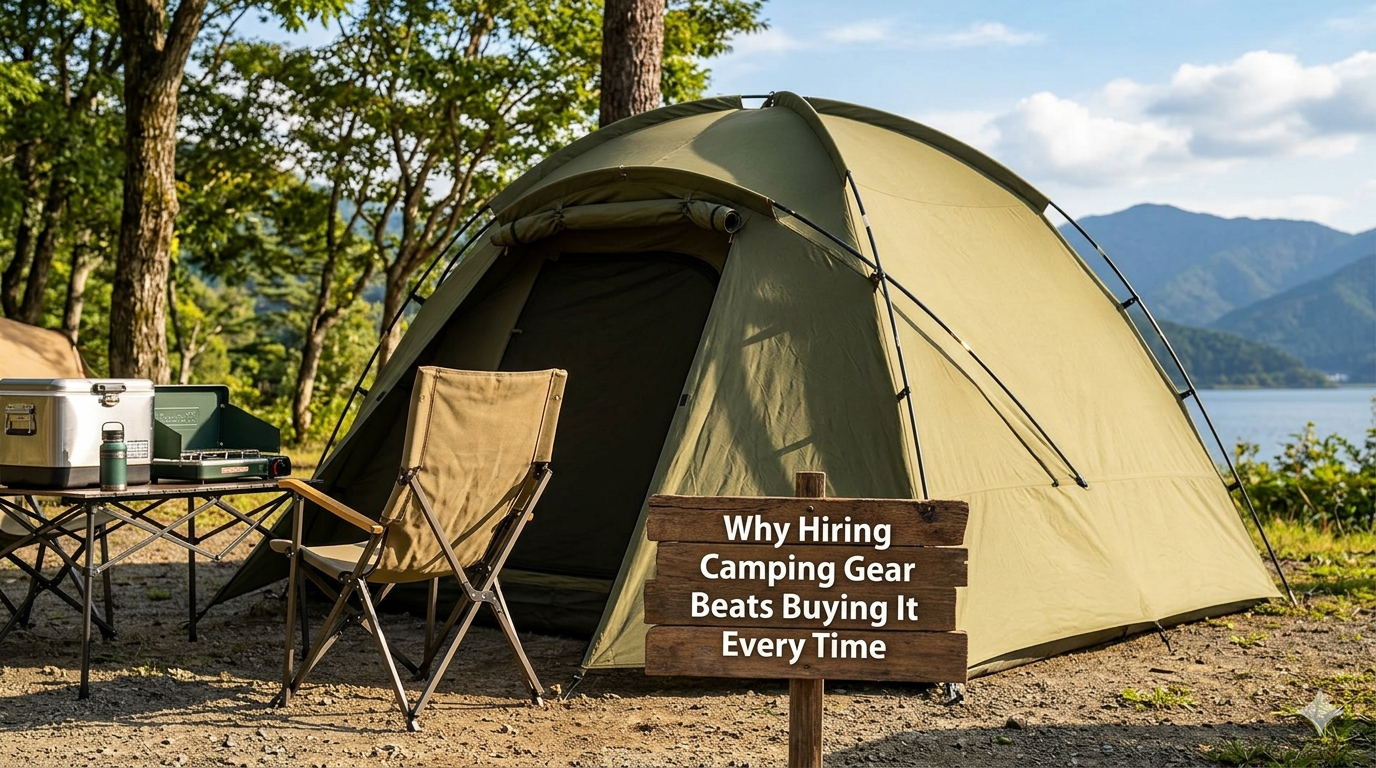
You spot a tent on Takealot. R8,500. Stretchers another R3,200. A decent cooler, R2,400. Camping chairs, R1,800. A two-burner stove, R1,500. Ground sheet, table, lighting, sleeping bags. Before you've even left the driveway, you're R22,000 in the hole — and that's before you've thought about where to store any of it.
This is the conversation we have with new customers almost every week. Someone planning their first family camping trip, doing the maths on what it'll cost to kit out, and reaching the same conclusion: this is a serious investment for something we'll use four weekends a year.
Let's actually do the maths.
What it costs to buy
Here's a realistic shopping list for a family of four, sourced from current South African retailers:
| Item | Typical price |
|---|---|
| 4-person dome tent (decent quality) | R6,500 |
| 4 × camping stretchers | R3,200 |
| 4 × sleeping bags + mattresses | R3,000 |
| 2-burner gas stove + bottle | R1,800 |
| Cooler box (52L) | R2,400 |
| 4 × camping chairs | R1,600 |
| Foldable table | R900 |
| Ground sheet, lighting, basics | R1,200 |
| Total upfront cost | R20,600 |
That's the buy-once price for entry-to-mid-range gear. You can spend less by going cheaper (and replacing it sooner) or more by going premium. Twenty grand is the realistic middle.
What you actually use it for
Be honest with yourself here. The average South African camping family does:
- One long weekend over Easter
- One December camping holiday (5–7 days)
- Two or three other weekend trips during the year
That's somewhere between 15 and 20 days of camping per year, on the generous end. Some people do more. Most do less. So your R20,600 of gear is being used roughly 5% of the year and stored the other 95%.
What it costs to hire instead
Here's the same family of four, hiring a Camp Combo from us for the same usage pattern:
| Trip | Hire cost |
|---|---|
| Easter long weekend (4 days) | R3,000 |
| December camping holiday (7 days) | R5,250 |
| Two weekend trips (2 days each) | R3,000 |
| Total annual hire cost | R11,250 |
That's roughly half the upfront cost of buying — and you have zero gear to store, zero maintenance, zero replacement costs when something tears or breaks.
If you camp the equivalent of 35+ days per year, every year, buying genuinely starts to make more financial sense. If you camp less than that — and most casual campers do — hiring wins on cost alone, before you even factor in convenience.
The hidden costs of owning
The R20,600 sticker price isn't the whole story. When you own gear, you also pay for:
Storage. A full camp kit takes up serious garage or storage room real estate. If you live in an apartment or a smaller house, this matters. If you've ever had to rent storage to keep camping gear, you know exactly what we mean.
Maintenance and repair. Tent zips break. Stretcher canvases tear. Cooler latches snap. Stoves clog. You'll spend an evening every season patching, cleaning, or repairing something. Or paying someone else to.
Replacement. Most mid-range camping gear has a useful life of about 5–7 years with light use. So that R20,600 isn't a one-time cost — it's roughly R3,000–R4,000 per year amortised across the gear's life.
The "gear creep" tax. Once you own gear, you keep buying more. A nicer tent. A bigger cooler. A second stove for backup. We've seen people spend R5,000+ a year on camping accessories they "couldn't live without" after the first big buy.
When buying actually makes sense
We'd be lying if we said hiring beats buying for everyone. Here's when buying genuinely is the better call:
- You camp 30+ days a year, every year. Frequent campers should own.
- You're a 4x4 / overlanding enthusiast with custom rigs, rooftop tents, and very specific gear preferences. Hiring won't fit your kit.
- You camp in remote areas where last-minute hiring isn't an option.
- You genuinely love the gear itself. If you find joy in your kit, that's a legitimate reason to own it. We're not here to tell you how to feel about your stuff.
The casual camper's actual best move
If you're reading this trying to decide whether to drop R20,000 on a Makro shopping spree before your December trip — don't. Hire the gear for that trip first. See if you actually love camping enough to do it more than three or four times a year. If you do, then start building a kit slowly, item by item, buying the things you've used most.
Most people who try this end up renting indefinitely. It's cheaper, simpler, and you don't have a half-collapsed tent taking up the back of your garage in March.
Ready to skip the shopping?
Browse our hire range — eight items, transparent pricing, full deposit refund.